
Categories: Newsletter
Tags: groundbreaking ceremony lunar eclipse neptuen outer solar system pluto SVO March Newsletter
Posted by: Ella Elman
SVO March Newsletter
Join us on April 11th for the Groundbreaking Ceremony
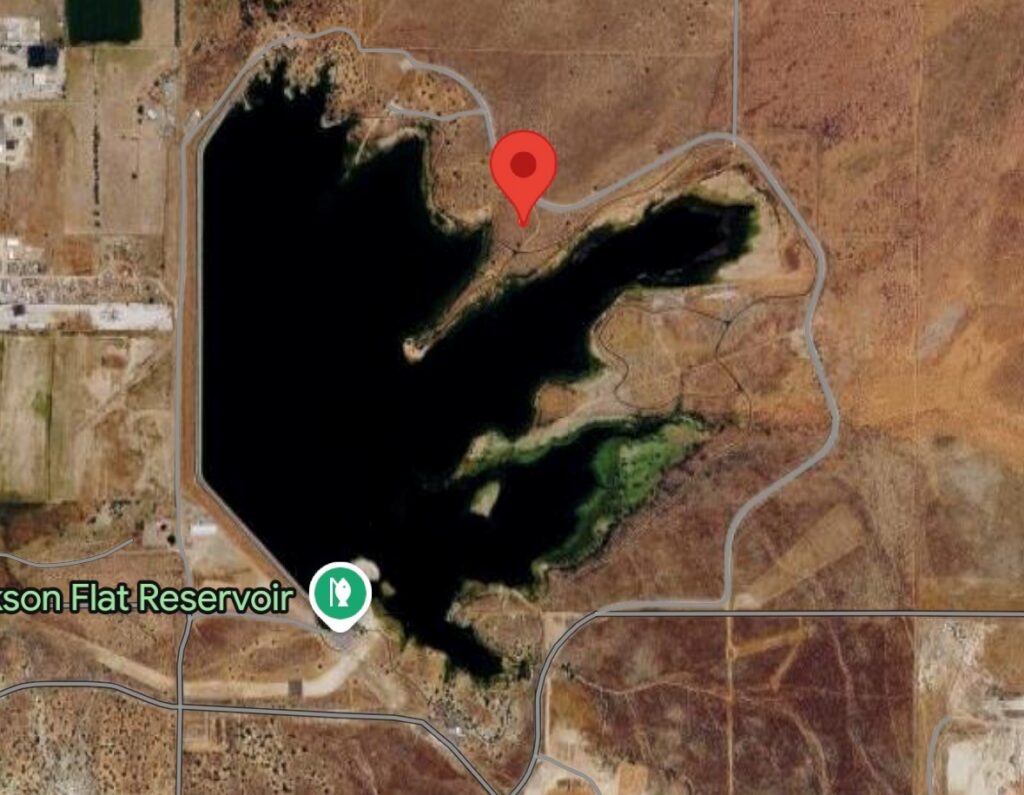
Groundbreaking for Phase I of Kanab’s new Stellar Vista Observatory facility is scheduled for 3:00 pm on Saturday, April 11th! We can’t be more excited that construction will soon get underway! Please join us on the north side of Jackson Flat Reservoir for this brief and inspiring ceremony! The exact location is: Lat/Long: 37.0152266, -112.5120763.
Google Maps: https://maps.app.goo.gl/98XKKSbgFgi1ixTe8?g_st=ic. The SVO board of directors, Kane County Water Conservancy, Garkane Energy, and other key stakeholders will be there to mark the occasion.
Update for Great Planetary Popularity Contest: Double Your Donation!
A huge thank you to all who voted in the Great Planetary Popularity Contest this month! We raised a total of $1,100 towards our $5,000 goal so far. With a few more weeks to go in our campaign, Eric and Sylvia Sims of SVO have generously offered to match the next $1,000 in donations for the Von Del Chamberlain Walk through the Solar System, so now your vote goes twice as far!
Mars is solidly in the lead, with 69% of all votes. But Pluto and Earth are neck and neck, each garnering around 10%. Let’s see if the rest of the solar system can catch up! This month, we feature an article about the planets of the outer solar system: Uranus, Neptune and of course, Pluto. Please see that below. The Great Planetary Popularity Contest goes on! With each dollar donated you can vote for your favorite planet or for the sun, for as many planets as you like, in any amount. The contest runs through the end of April 2026, and the celestial body raising the most funds wins!
To vote, head to Planetary Popularity Contest: Build Our Solar Trail! | Stellar Vista Observatory and click the donate button at the top of the page. Select the amount you would like to donate or enter your own custom amount. Underneath, you will see a drop-down menu where you can select the celestial body of your choice. Donations of $100 or more will get a complimentary digital star chart for the day and year of your choice. Donations of $250 or more will receive an invitation to a private night sky experience with SVO’s dynamic night sky interpreters.
Celebrate International Dark Sky Week with SVO
A full week of amazing events are planned in April to celebrate International Dark Sky Week and Utah Dark Sky Month!
On Wednesday, April 15th, we present the first lecture in our series called the Curious Cosmos Science Talks. Please join us at 6:00 pm in the Kanab City Library multi-purpose room for the first lecture in our 2026 series titled, Curious Cosmos Science Talks. SVO’s Eric Sims will deliver a talk entitled, “The Solar System: Strange Things They Didn’t Teach You”, sharing all kinds of interesting tidbits about our solar system that most of us know nothing about.
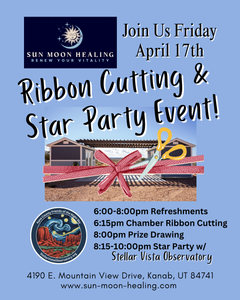
On Friday, April 17th, SVO is presenting a public star party at the Ribbon Cutting Ceremony for Sun Moon Healing, the newest member of Kane County Friends of the Night Sky, SVO’s voluntary program helping business owners to inventory and select exterior lighting fixtures that preserve the visibility of the stars above Kanab. Sun Moon Healing is located outside of the downtown area at 4190 E Mountain View Drive. Refreshments will be served from 6 pm to 8 pm with the official Chamber of Commerce Ribbon Cutting Ceremony at 6:15 pm. A prize drawing will occur at 8 pm, followed by the star party.
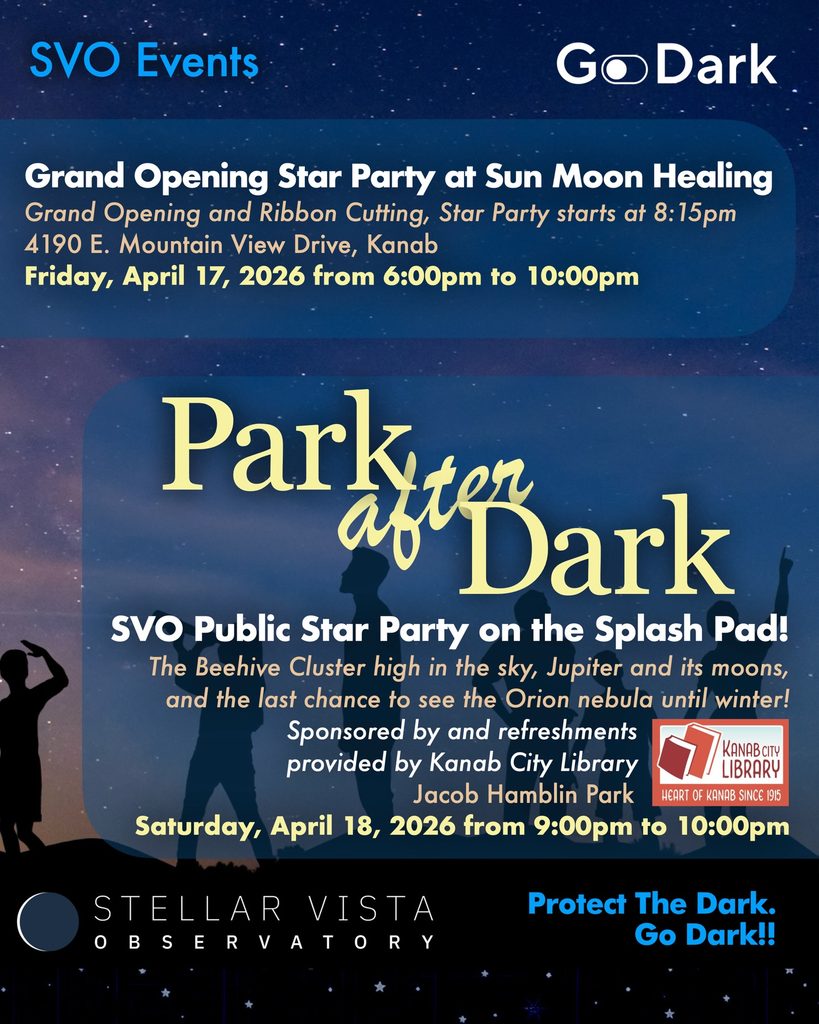
On Saturday, April 18th, SVO and the City of Kanab are teaming up for “Park After Dark”, a public star party on the splash pad at Jacob Hamlin Park. Celestial observations begin at 9:00 pm. The Beehive Star Cluster will soar high overhead with Jupiter and its Galilean moons nearby. This may be your last chance to see the beautiful Orion nebula until next winter.
Event Round Up
Lunar Eclipse Star Party
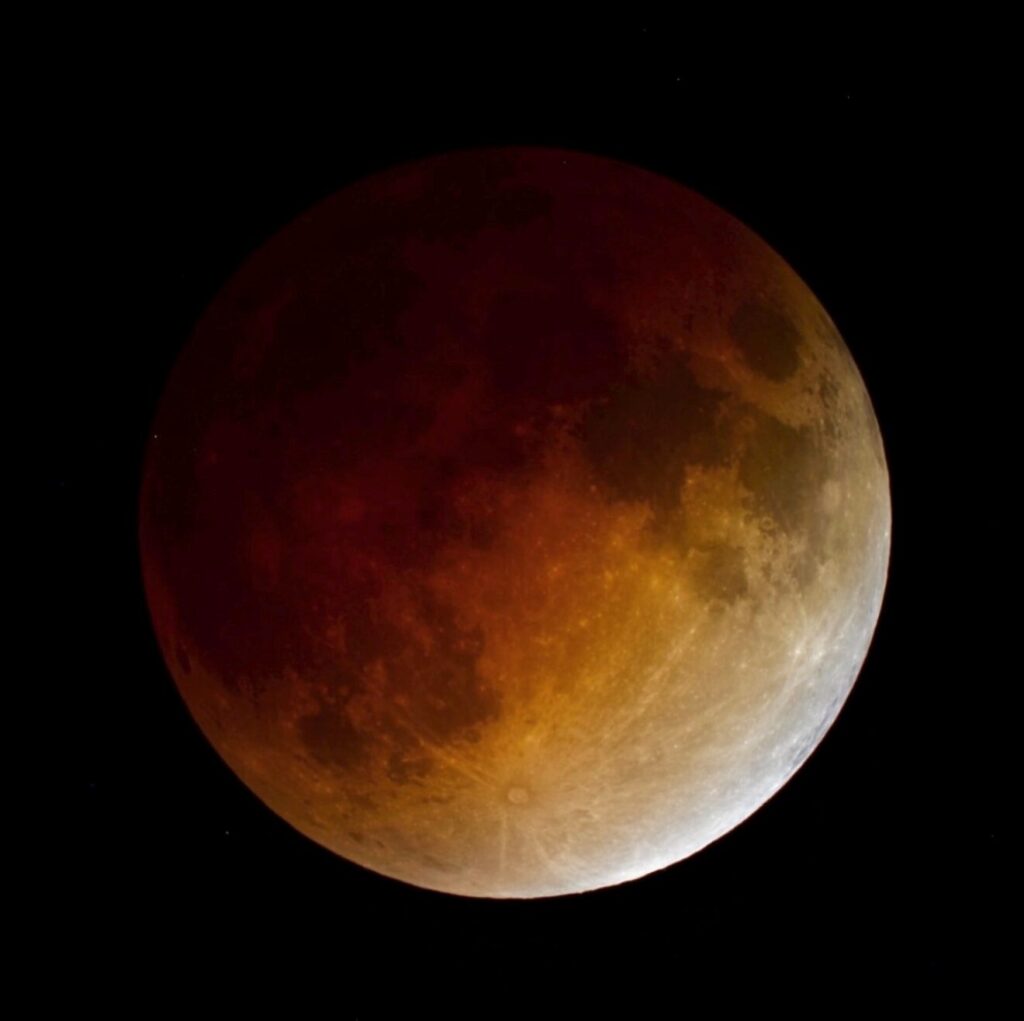
About a dozen intrepid night-owls gathered to behold a total eclipse of the Moon on March 3rd, with one visitor arriving from as far away as Salt Lake City. The party lasted from 2:30 am to daybreak!
Lunar eclipse photo is courtesy of Michael McKeon.
Coral Pink Sand Dunes Star Party
With an agile last moment shift to avoid cloudy conditions, SVO’s free public star party for the month of March took place under clear skies on Saturday the 14th at the Coral Pink Sand Dunes State Park.
Around 30 sky watchers joined the fun on the Park’s observation deck, where Michael McKeon showed off scintillating objects in the deep sky with his telescope, and Eric Sims set up a craft table for kids making constellations out of pipe cleaners and beads. Participants learned how stars form in gaseous interstellar nebulae, and the kids got to take home a photo from the Hubble of a new star forming in the Orion Nebula! As an added bonus, a participant visiting from St. George with a laptop and a Seestar shared live-stacked pictures of the Orion Nebula and Bode’s Galaxy with the others on the deck.
Utah Dark Sky License Plate
Calling all dark sky supporters! Now you can get your own Utah Dark Sky license plate and support dark sky activities at Utah State Parks at the same time. Sign up to pledge your support for our state to print these special plates. 500 pledges are needed to start production. Learn more here: Dark Sky License Plate — Dark Sky Utah.
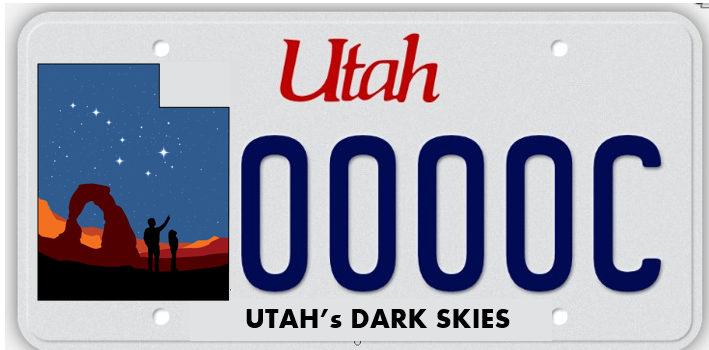
Photo of the Month
This month we feature a photo taken by Michael McKeon.
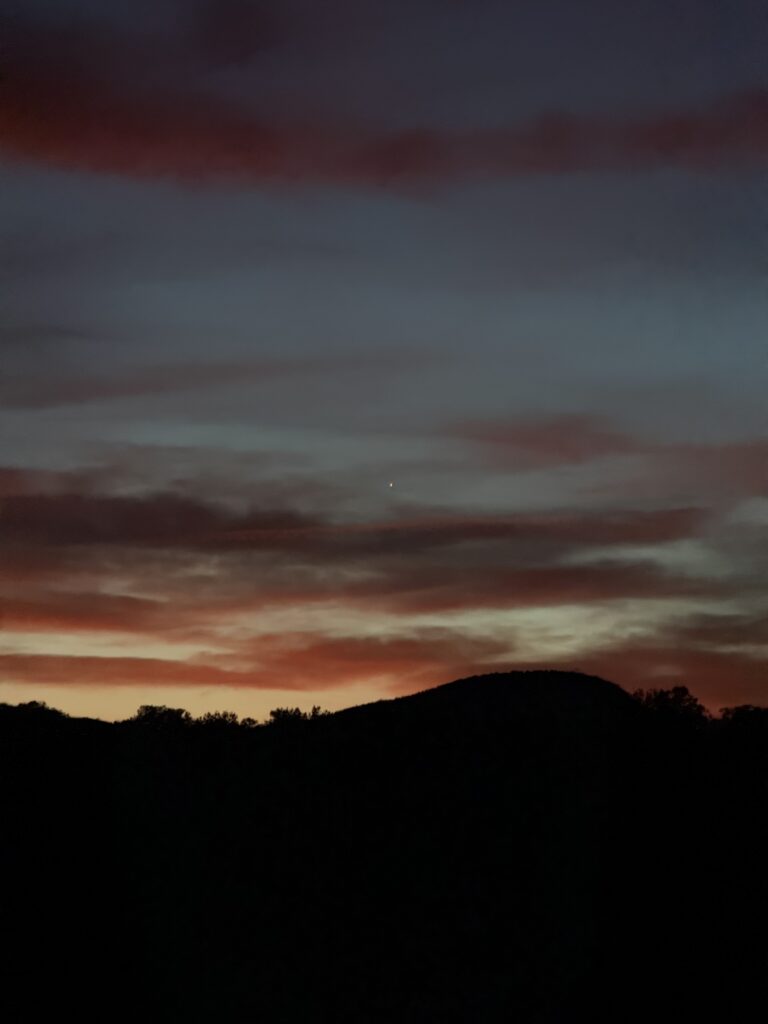
Venus was captured in the middle of this photo taken from the Peekaboo trailhead and appears to be the only object in the night sky.
If you have a great star or night sky photo that you would like to share with our audience, we would love to include it in our monthly newsletter. Please send your photos to info@stellarvistaobservatory. along with your name and the object(s) in the photo.
The Outer Solar System: The Realm of Ice Giants and Distant Worlds
by Ella Elman, SVO
Beyond the orbit of Saturn, the solar system changes again — growing colder, darker, and more mysterious. This is the domain of the ice giants and the Kuiper Belt, where sunlight is faint and the planets are shaped by exotic chemistry, powerful winds, and hidden internal heat. Photos are courtesy of nasa.gov.
Uranus: The Tilted Ice Giant
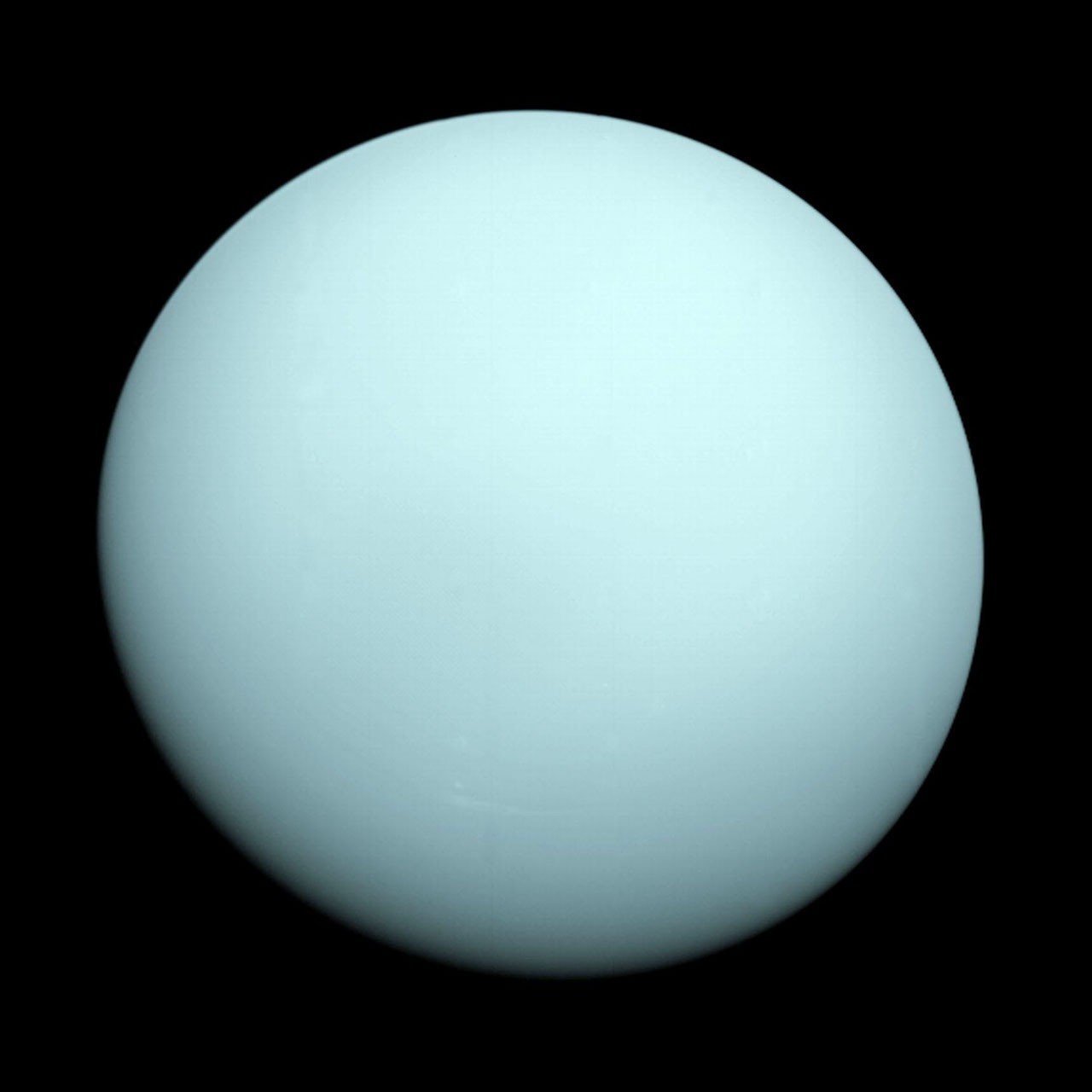
Uranus is unlike any other planet. Instead of spinning upright like Earth or Jupiter, it rolls around the Sun on its side, tilted by about 98 degrees. This extreme orientation gives Uranus the most dramatic seasons in the solar system — each pole spends decades in continuous sunlight, then decades in darkness.
What makes Uranus remarkable is an atmosphere rich in hydrogen, helium, and methane. The methane in the atmosphere gives Uranus a pale blue color due its absorption of the red light spectrum. Uranus also has a faint ring system and more than two dozen moons. The frigid temperatures present on the planet make it one of the coldest planets in the solar system.
Despite its distance, Uranus is surprisingly dynamic, with storms and cloud bands that appear and fade over time. It’s a world that challenges our expectations of what a planet can be.
Neptune: The Wind‑Whipped Blue Giant
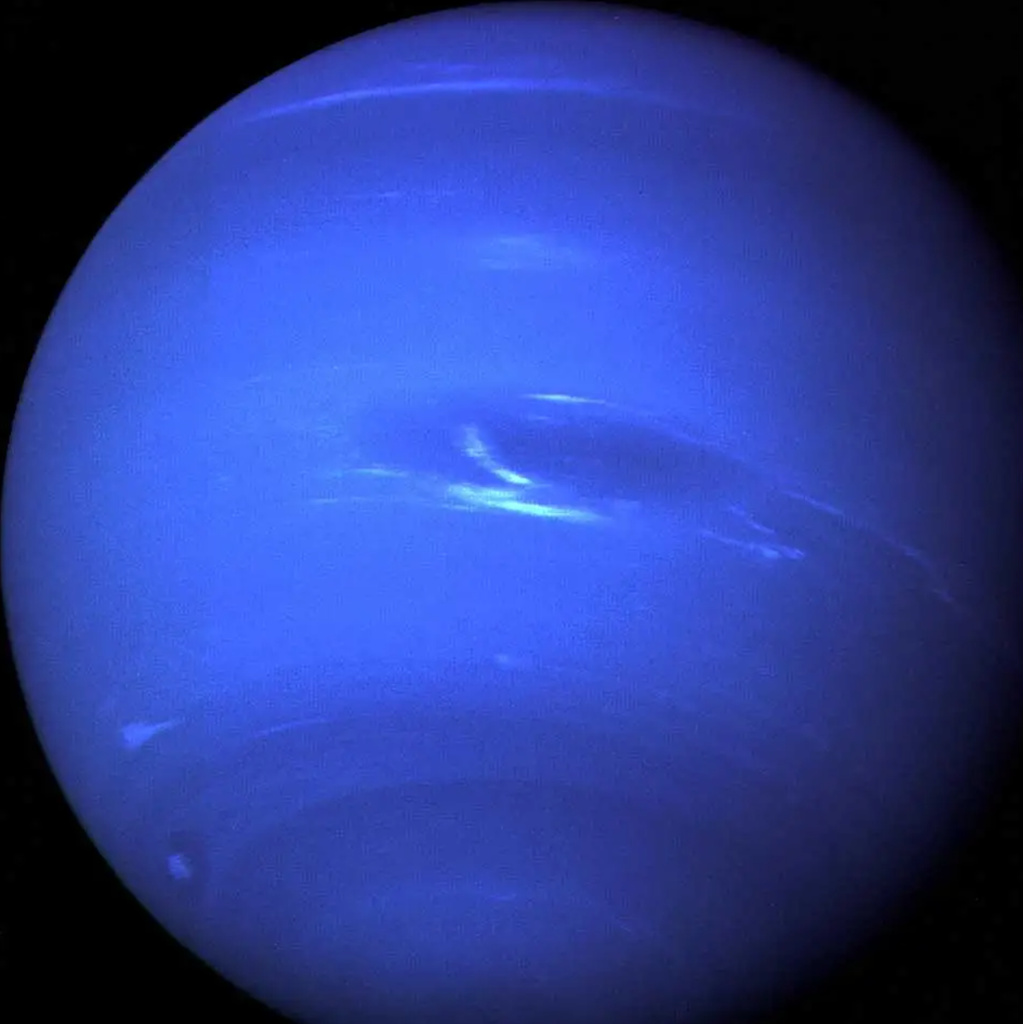
Neptune is the solar system’s most distant major planet — a deep sapphire world where supersonic winds roar across the atmosphere. Though it receives very little sunlight, Neptune radiates more heat than it absorbs, driving powerful storms that dwarf anything on Earth. The winds on Neptune are the fastest in the solar system, driving a dynamic atmosphere with dark storm system.
Neptune also has a collection of moons, including Triton, the seven-largest moon in solar system. Triton orbits Neptune in a retrograde orbit—revolving in the opposite direction to the parent planet’s rotation—the only large moon in the Solar System to do so. Triton may also hide a subsurface ocean.
Neptune is a world of extremes, shaped by internal heat and complex atmospheric chemistry.
Pluto and the Kuiper Belt: The Solar System’s Frozen Frontier
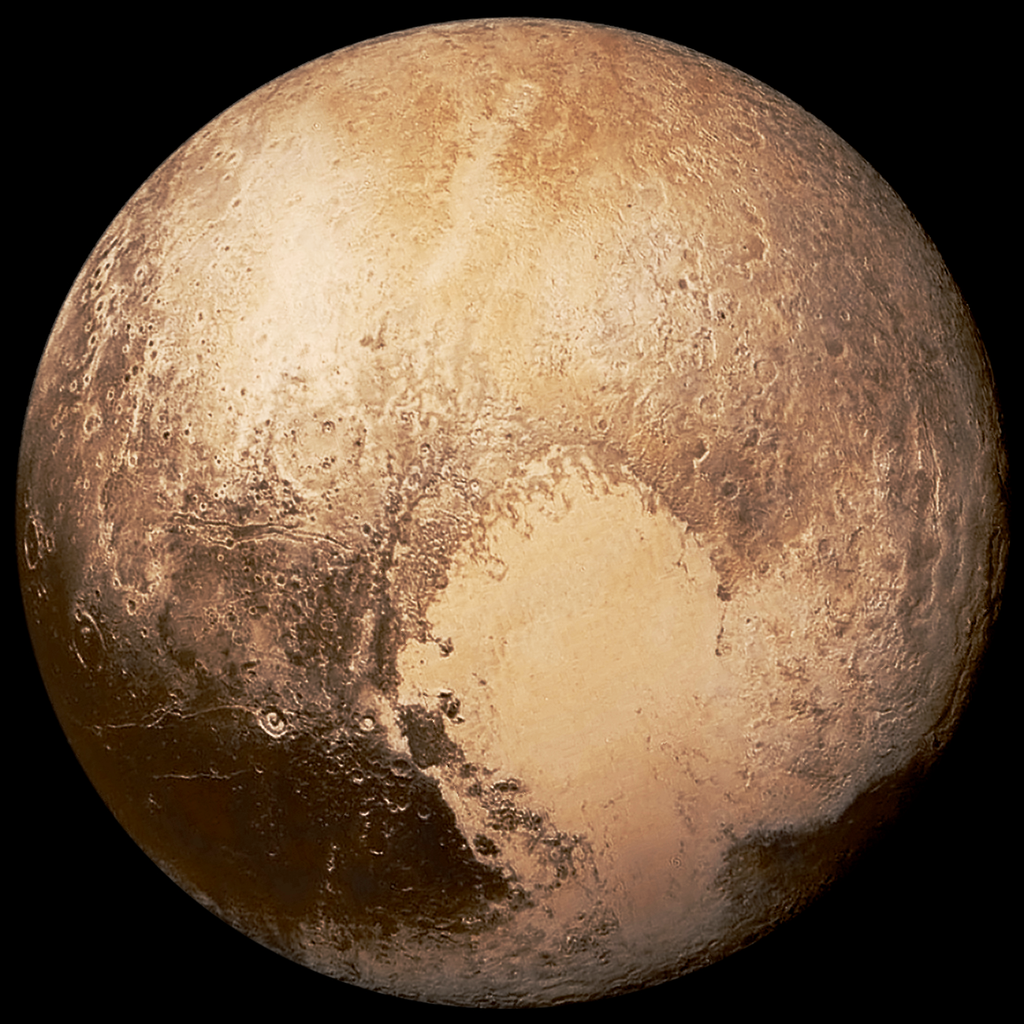
Far beyond Neptune lies the Kuiper Belt, a vast region filled with icy bodies — remnants from the solar system’s earliest days. Pluto, once considered the ninth planet, is now recognized as one of the largest and most fascinating of these distant worlds.
Pluto is small, but it’s anything but simple. Pluto has a surface of nitrogen, methane, and carbon monoxide ice with mountains made of water ice as hard as rock. It has a thin, hazy atmosphere that expands and collapses with the seasons. Pluto has a large moon, Charon, just over half the diameter of Pluto. Charon is so massive that the two worlds orbit a shared center of gravity.
The Kuiper Belt is a cosmic time capsule, preserving materials from the solar system’s formation and offering clues about how planets grow and evolve.
The outer solar system contains some of the most surprising and least understood worlds in our cosmic neighborhood. The objects and worlds in this region are shaped by distance, darkness, and deep time — a fitting finale to the journey from the Sun to the solar system’s edge.
Free Public Star Parties and Events
Please join us for a host of free events celebrating International Dark Sky Week and Utah Dark Sky Month in April!
- Wednesday, April 15th, 2026 – Kanab City Library multi-purpose room, 6:00 pm. Curious Cosmos Science Talk entitled, “The Solar System: Strange Things They Didn’t Teach You.
- Friday, April 17th,2026 – Sun Moon Healing ribbon cutting ceremony, 4190 E Mountain View Drive, 8:15 pm. A prize drawing will occur at 8 pm, followed by the star party.
- Saturday, April 18, 2026 – “Park After Dark”, a public star party in collaboration with the City of Kanab at Jacob Hamlin Park, on the splash pad starting at 9:00 pm.
- Thursday, May 7, 2026 – “Southern Utah Starry Nights”, 20th annual Amazing Earthfest, Jackson Flat Reservoir Boat Launch Parking area, 9:30 pm. Jupiter and Venus grace a dark and moonless spring sky while music performed live by Classical Guitarist Julian Harman adds new dimensions to the occasion.
Our events calendar can be seen at: Public Star Parties | Stellar Vista Observatory.


Comments are closed.